
What Is the Best Type of Under Desk Drawers?
Choosing the best type of under desk drawers depends on more than appearance. The right option should improve access, protect equipment, and preserve comfortable leg movement. A shallow drawer may hold pens and notebooks, while a deeper model can store cables, headphones, or a compact keyboard. However, extra capacity often reduces knee clearance. That trade-off deserves attention.
Ergonomist Alan Hedge offered a useful principle: “The best posture is always the next posture.” This idea applies directly to under desk drawers. A drawer should open smoothly without forcing the user to twist, lean, or raise the shoulders. Mounted drawers suit fixed workstations and create a cleaner footprint. Rolling drawers offer flexibility, especially in shared offices. Yet, small casters can catch on thick carpets, which is an easily missed problem.
Material and construction also influence long-term value. Steel drawers usually resist daily impact, while engineered wood can create a warmer office appearance. Check the drawer’s weight rating before storing binders or tools. Soft-close runners reduce noise during focused work. Lockable models may protect personal documents, but a basic lock is not a complete security system. In practice, the “best” choice is rarely universal. I initially favored maximum storage, but excessive depth made leg movement uncomfortable. A better comparison considers desk height, chair position, floor space, and daily habits. This guide examines those factors carefully, helping readers compare under desk drawers with realistic expectations rather than attractive specifications alone.
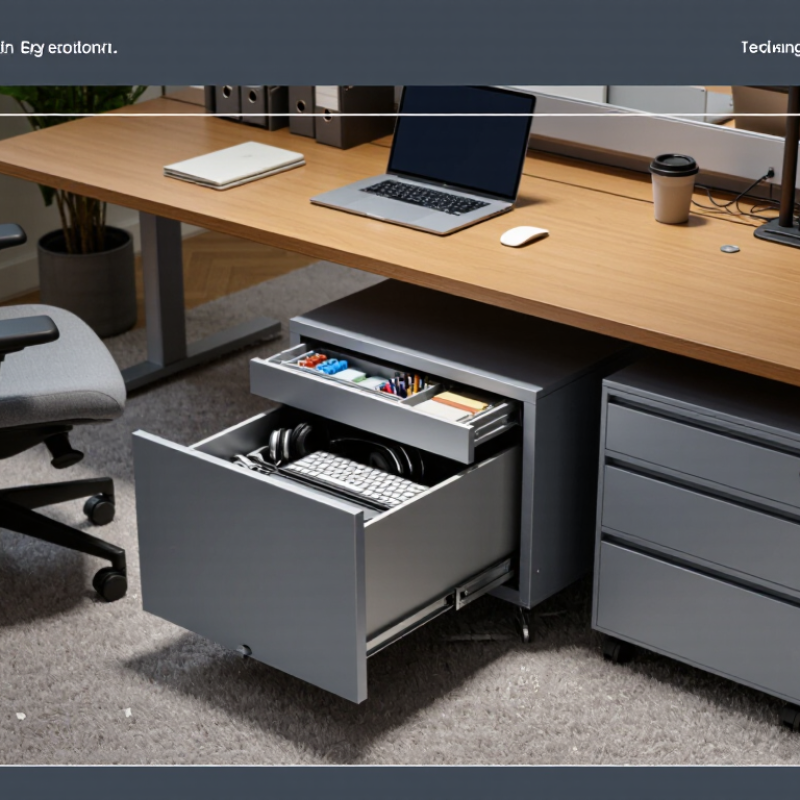
Types of Under Desk Drawers and Their Main Features
Under desk drawers come in several practical forms, and each suits a different workspace. Grand View Research valued the global office furniture market at approximately USD 54.6 billion in 2022. Its continued growth reflects demand for compact, flexible storage. A fixed pedestal drawer offers strong stability and usually includes a lockable file section. It works well beside a seated user. However, it may reduce legroom under smaller desks.
A mobile drawer unit adds casters, so users can move supplies between workstations. Its main features include multiple compartments, a wider top surface, and easier cleaning access. Clamp-on drawers attach beneath the desktop without drilling. They suit renters and shared offices, but heavy items can strain the mounting hardware. A shallow keyboard drawer saves surface space, while a hidden personal drawer stores notebooks, chargers, and small devices. ANSI/BIFMA storage standards emphasize stability, durability, and safe operation, which are useful benchmarks when comparing products.
Tips: Measure knee clearance first. Leave space for cables. Test the drawer fully open. Choose smooth metal runners and rounded edges. The largest drawer is not always best. I once selected one that looked efficient, but its deep frame blocked my chair. That mistake matters. Check weight limits, handle comfort, and whether the drawer still opens beside a desk leg. A quality finish also resists scratches from daily office use.
| Drawer Type | Typical Configuration | Main Features | Installation Method | Best For | Advantages | Limitations | Overall Suitability |
|---|---|---|---|---|---|---|---|
| Single Shallow Drawer | One compact drawer, usually 5–10 cm high | Stores pens, notebooks, cables, chargers, and other small office supplies | Usually mounted beneath the desktop with screws or an adhesive mounting system | Minimalist workstations and small desks | Compact, easy to organize, and leaves plenty of legroom | Limited storage capacity; unsuitable for bulky items | Excellent for essentials |
| Two-Tier Drawer Unit | Two stacked drawers with separate compartments | Provides divided storage for stationery, documents, accessories, and personal items | Commonly fixed beneath the desk with screws or a reinforced mounting bracket | Home offices and general-purpose workstations | Balanced capacity and organization without taking up floor space | Requires adequate clearance beneath the desktop | Best all-around option |
| Three-Tier Drawer Unit | Three vertical drawers with a taller profile | Offers maximum under-desk storage for documents, supplies, and personal belongings | Usually screw-mounted; a strong desktop and stable support are recommended | Users who need high storage capacity | Efficient use of vertical space and good category separation | Can reduce knee room and may feel heavy when fully loaded | Best for maximum storage |
| Lockable Drawer | One or more drawers with a key or combination lock | Helps protect confidential papers, small valuables, and personal belongings | Normally screw-mounted to reduce the risk of removing the entire unit | Shared offices and privacy-sensitive workspaces | Adds a basic layer of privacy and controlled access | Often costs more and may have less internal space because of the locking mechanism | Best for privacy |
| Clamp-On Drawer | One compact drawer attached to the desk edge | Designed for desks where drilling is not desirable; installation is usually removable | Clamps to the desktop or support frame, depending on the design | Renters, temporary workstations, and frequently changed desk layouts | Easy to install and remove with little or no permanent modification | May support less weight and may not fit very thick or unusually shaped desks | Best for flexible installation |
| Sliding Under-Desk Drawer | One drawer on metal runners or a sliding rail system | Allows smooth access and keeps the drawer aligned during regular use | Mounted beneath the desktop using a rail, tray, or bracket system | Frequent-access supplies and ergonomic work areas | Convenient operation and better access than a fixed storage box | Needs accurate installation and sufficient clearance for full extension | Best for daily access |
| Mobile Pedestal Drawer Unit | Two or three drawers in a freestanding cabinet with casters | Provides larger storage capacity and can be moved when the workspace changes | Freestanding; no permanent attachment to the desk is required | Large offices and users who need flexible floor-level storage | High capacity, easy repositioning, and suitable for heavier items | Uses floor space and may reduce legroom under or beside the desk | Best for capacity and mobility |
| Keyboard and Supply Drawer | Pull-out tray combined with a shallow storage compartment | Holds a keyboard or writing tools and can help clear the desktop | Mounted beneath the desktop with a sliding tray mechanism | Compact computer desks and clean desktop setups | Combines workspace organization with quick access to input devices | Less suitable for storing documents or larger office supplies | Best for compact computer setups |
Related Posts
-
2026 Best Reception Area Desks for Global Buyers
-
Top 10 Benefits of Acoustic Wall Panels for Buyers?
-
What Are the Best Types of Training Room Tables?
-
How to Choose the Best Office Phone Booths for Your Workspace?
-

How to Choose Nesting Training Chairs for Your Business?
-

Top 10 Training Room Tables to Enhance Your Workspace?