Skip to content

How to Choose Executive Office Desks for Global Buyers?

Choosing executive office desks for global buyers is less about appearance than dependable performance. A desk may look impressive online and fail during installation. I have seen projects delayed by unclear measurements, missing cable cutouts, and fragile edge packaging. Small details matter.

Before approving a sample, buyers should check desktop thickness, load capacity, surface resistance, and return conditions. A walnut finish can feel warm, while matte laminate may better withstand documents, coffee, and frequent cleaning. Neither choice is universally superior. The right decision depends on climate, workload, room size, and maintenance resources. Executive office desks require practical evaluation, not showroom enthusiasm.

A professional sourcing review should connect design with evidence. Request material specifications, factory quality records, packaging photographs, and consistent product drawings. Confirm that drawers glide smoothly and power access suits real users. For international orders, clarify Incoterms, delivery schedules, assembly support, and replacement-part procedures before payment. Local building, electrical, and workplace requirements may affect integrated features, so qualified advisers should verify them. Price deserves attention, but the cheapest quote can become expensive after damage or rework. Visual impact still matters. Leadership spaces communicate credibility. Yet a polished desk with poor cable management quickly reveals its weakness. Buyers should compare samples, ask uncomfortable questions, and record every assumption. Some recommendations remain uncertain until the desk is tested in its intended room. That uncertainty is not failure. It is a reason to purchase carefully and review the decision after use.
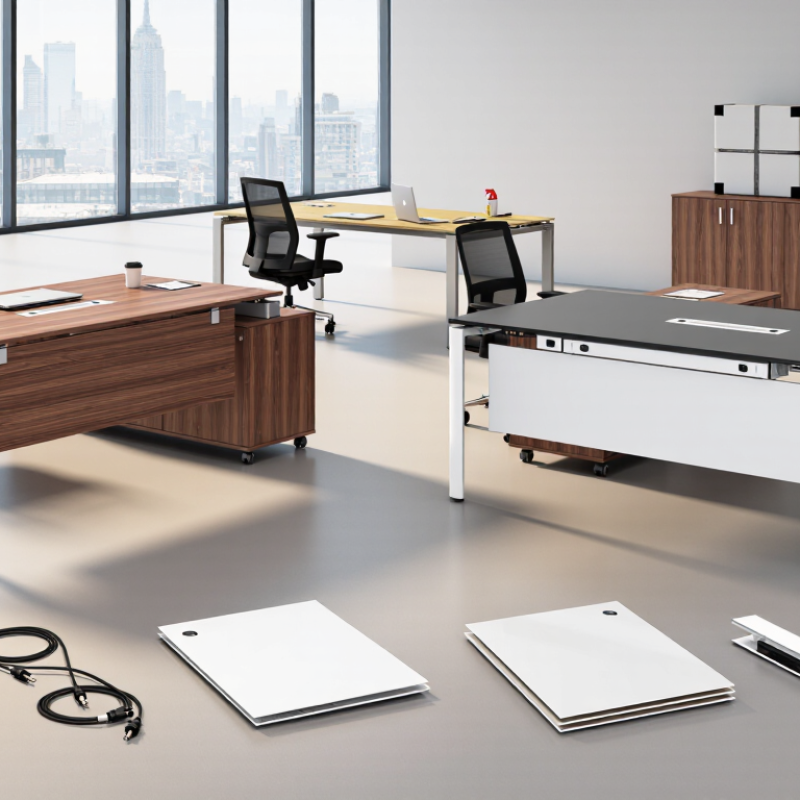
How to Choose Executive Office Desks for Global Buyers?

Define Executive Office Desk Needs for Different Global Markets

Defining executive desk needs starts with the room, not the finish. In dense city offices, compact footprints and integrated cable storage can matter more than a broad conference-style surface. Larger offices may need space for paper review, dual monitors, and visitor seating. Measure doorways, lifts, and desk clearances before selecting a large unit. A beautiful desk that cannot reach the office is still a poor choice.

Climate and daily work patterns also shape material choices. In humid regions, stable construction and moisture-resistant finishes deserve close attention. In dry or temperature-variable settings, ask how panels and joints respond to seasonal changes. Details matter. Check edge finishing, drawer travel, and how easily staff can reach power and data connections. Electrical modules should suit the destination market, with compatibility confirmed by qualified local suppliers.

Global buyers should also define who uses the desk and how it arrives. A fixed-height model may suit some teams, while shared offices often benefit from adjustable options. Confirm assembly instructions, replacement-part access, packaging protection, and realistic delivery dimensions. I would not assume one specification fits every branch; that shortcut can create costly compromises. Even preference surveys can miss how people actually work, so a sample desk or room mock-up may reveal issues that drawings overlook.

Compare Desk Materials, Styles, Sizes, and Functional Features

Choosing an executive office desk for global use starts with its material. Solid wood offers warmth, repairability, and a distinct grain, but it can expand in humid climates. Veneered panels provide a stable appearance and lower weight, while high-pressure laminate handles frequent cleaning and daily wear. Steel frames improve rigidity, especially on wide desks. Yet, poorly sealed edges can swell after repeated spills. No material is perfect. Ask for surface specifications, edge treatment, load ratings, and formaldehyde compliance documents before approving samples.

Style should support the room’s purpose, not merely impress visitors. A rectangular desk suits focused work and straightforward cable routing. A boat-shaped top gives more guest space, though it needs a larger room. L-shaped designs separate computer work from meetings, but they complicate delivery and installation. In procurement projects, I measure doorways, elevators, and turning areas before selecting a shape. A beautiful desk can still fail on arrival. That detail is often underestimated.

Size must match the user, chair, monitor, and storage needs. A practical executive surface needs enough depth for screens and writing without forcing a forward reach. Check desk height, leg clearance, modesty panels, and adjustable options for different users. Functional features deserve hands-on testing. Look for concealed cable ports, soft-close drawers, lockable storage, power access, and replaceable components. Test each mechanism repeatedly, not once. Buyers should confirm packaging quality, assembly instructions, spare hardware, and local service support. Specifications sound reassuring, but real samples reveal awkward handles, glare, or unstable feet. Leave room to revise the choice.

Evaluate Ergonomics, Quality Standards, and Workplace Compatibility

How to Choose Executive Office Desks for Global Buyers?

Ergonomics should guide executive desk selection, not appearance alone. Gallup’s State of the Global Workplace 2024 report found that 41% of employees experienced significant daily stress. A poorly planned workstation can intensify that pressure. Look for height-adjustable surfaces, generous legroom, and rounded front edges. The user’s elbows should rest near 90 degrees while typing. A 120-centimeter-wide surface may fit a laptop, screen, and documents without crowding.

Quality must be verifiable. Request load-testing records aligned with ANSI/BIFMA X5.5 for desk products. Check surface durability, frame stability, cable management, and replacement-part availability. ISO 9241-5 provides useful guidance on workstation layout and posture. These standards do not guarantee comfort for every person. That limitation matters.

Workplace compatibility also varies across countries. Confirm local electrical requirements for integrated power modules. Review emissions documentation, fire-performance claims, packaging materials, and installation instructions. A desk for a private office may feel excessive in a compact collaborative workspace. Measure doorways, lifts, and delivery routes before ordering. Small details prevent expensive surprises.

A practical weakness remains. Buyers often compare finishes before testing posture. That order should change. Ask users to work at a sample desk for thirty minutes. Observe shoulder tension, monitor distance, and movement. A beautiful desk can still be the wrong desk.

Review Suppliers, Customization Options, Pricing, and Trade Terms

Choosing executive office desks for global purchasing starts with supplier evidence, not polished product photos. Request material specifications, production images, sample details, and references from comparable export orders. Check whether the supplier can repeat the finish and dimensions across the full quantity. A showroom sample can look excellent while a later batch varies. Ask for written lead times, packaging standards, and clear points of contact. Details matter.

Customization can include desk size, cable openings, modesty panels, storage, surface finish, and accessible power options. Send dimensioned drawings and confirm each change in the quotation. Even a small adjustment can affect tooling, production time, and replacement parts. Compare item prices with packaging, freight, insurance, duties, and inland delivery where applicable. Clarify the delivery term, named destination, payment milestones, quote validity, inspection process, and how transit damage is documented. The lowest price may leave costly gaps. I would also allow time for one review cycle; buyers sometimes approve drawings too quickly.

Tips: Keep a comparison sheet for specifications, lead time, total landed cost, and trade terms. Ask suppliers to mark every deviation from your requirements. If a quote is vague, pause and request clarification before paying a deposit.

How to Choose Executive Office Desks for Global Buyers? — Review Suppliers, Customization Options, Pricing, and Trade Terms

A practical comparison of common supplier types and purchasing considerations for international buyers. Use the ranges as early-stage budgeting guidance, then request a written, specification-based quotation.

Supplier Type Typical Desk Offering Customization Options Indicative Unit Price (USD) Typical Production Lead Time Best Suited For Buyer Checks
Local commercial furniture distributor Ready-to-ship laminate, veneer, and modular executive desks; local delivery and service may be available. Usually limited to available sizes, finishes, and accessories; some distributors offer modest configuration changes. $300–$1,500 per desk, depending on material, size, and specification. In-stock items may ship within days to a few weeks; special orders commonly take several weeks. Small orders, short timelines, and buyers who value local support. Confirm stock status, delivery and assembly charges, warranty coverage, and replacement-part availability.
Contract furniture manufacturer Commercial-grade desks for offices and projects, often offered in coordinated ranges with storage and meeting furniture. Choice of dimensions, finishes, modest layout changes, cable management, modesty panels, and matching storage. $500–$2,500 per desk; project specifications and quantities affect the quote. Often about 6–12 weeks after approved drawings and finish selection. Office fit-outs, repeat orders, and projects requiring consistent specifications. Ask for material specifications, test or compliance documents relevant to the destination market, and a confirmed production schedule.
Export-oriented factory Flat-pack or assembled desks in laminate, metal, veneer, or mixed materials; export packing is generally available. Potentially broad options for size, finish, edge treatment, hardware, packaging, and private-label packaging where legally permitted. $150–$1,200 per desk for many standard or configurable models; premium materials and custom engineering can cost more. Commonly about 4–10 weeks for production, plus transit time. Importers and project buyers placing larger orders with time to manage international freight. Verify factory capability, sample quality, carton dimensions and weight, inspection criteria, MOQ, and export documentation.
Custom woodworking or bespoke furniture workshop Made-to-order desks with distinctive proportions, joinery, and material selections. High flexibility in dimensions, wood species, veneer, finish, detailing, integrated storage, and cable routing. $1,500–$5,000+ per desk; bespoke materials and labor-intensive designs can exceed this range. Often about 8–16 weeks or longer, depending on design approval and material availability. One-off executive suites, hospitality projects, and buyers prioritizing design specificity. Approve production drawings and finish samples; clarify tolerances, installation responsibility, and repair procedures.
Height-adjustable desk specialist Executive-style desks with electric or manual sit-stand mechanisms, often paired with larger tops and storage. Frame and control options, desktop size and finish, cable trays, power accessories, and selected storage configurations. $700–$2,500 per desk, depending on frame, top, controls, and accessories. Stock models may be available quickly; made-to-order configurations can take several weeks. Workplaces seeking adjustable work surfaces and ergonomic features. Check lifting capacity, adjustment range, stability at maximum height, electrical requirements, warranty, and local service support.
Decision Area What to Specify or Compare Practical Buyer Guidance
Materials and construction Top substrate and thickness, veneer or laminate type, edge treatment, frame material, hardware, and surface finish. Request a written bill of materials and finish samples. Compare like-for-like specifications rather than relying on the term “executive” alone.
Customization and approval Overall dimensions, cable access, drawers, pedestals, modesty panels, finish, and assembly requirements. Have the supplier confirm the final drawing, sample, and tolerance before production. Record every approved option on the purchase order.
Pricing and total landed cost Unit price, tooling or sample charges, packaging, inland transport, freight, insurance, duties, taxes, delivery, and installation. Compare quotations on the same quantity, specification, shipment basis, and destination. A low factory price is not the same as a low delivered cost.
Minimum order and payment Minimum order quantity, deposit, balance-payment trigger, accepted payment method, and cancellation terms. For a first order, consider a pre-production sample and an agreed inspection process. Tie payment milestones to clearly defined documents or events.
Quality and compliance Inspection standards, packaging tests, product safety requirements, emissions rules, and destination-market documentation. Requirements vary by product and country. Confirm applicable rules with the importer, customs broker, or relevant local authority before ordering.
Incoterms® 2020 and delivery Named place or port, allocation of transport costs, transfer of risk, export/import clearance responsibilities, and insurance. Write the selected rule and precise named place into the contract. For example, FCA can suit containerized shipments; FOB is for sea or inland-waterway transport. Under CIF, the seller arranges and pays specified sea freight and minimum insurance to the named destination port, while risk transfers when goods are on board at the port of shipment.
After-sales support Warranty duration and exclusions, spare parts, claims procedure, response time, and local repair capability. Ask who pays for replacement parts and freight, and how transit damage or defects must be documented and reported.

Pricing and timing note: All figures are indicative planning ranges in USD per desk, not live market quotations. Actual prices and lead times vary by country, order volume, specification, materials, season, and freight conditions. Incoterms® is a registered trademark of the International Chamber of Commerce; the descriptions above are summaries, not a substitute for the full rules or professional trade advice.

Verify Shipping, Compliance, Installation, and After-Sales Support

How to Choose Executive Office Desks for Global Buyers?

An executive desk must arrive safely, not merely look impressive online. Request packed dimensions, gross weight, pallet details, and delivery terms before approving the order. Confirm whether the quoted service includes customs clearance, room delivery, or only curbside drop-off. Ask for moisture-resistant packaging when shipments cross humid regions.

Small details matter.

Compliance checks should match the destination country and project requirements. Review material declarations, safety documents, electrical certifications, and formal invoices with qualified local professionals. Verify that wood, coatings, glass, and powered accessories meet applicable standards. Do not rely on a generic certificate. It may not cover every component.

Our first shipping estimate was too optimistic because the lift-gate requirement was overlooked.

Installation planning deserves equal attention. Confirm assembly drawings, hardware labels, tool requirements, and access measurements for elevators and doorways. A pre-installation video call can prevent damaged corners and delayed labor. Ask whether installers are trained and insured locally.

After delivery, clarify the warranty period, response time, spare-part availability, and escalation process. Record defects with photographs and delivery notes immediately. A reliable supplier should explain who pays for replacement parts and return transport.

Support sounds simple, until a missing connector stops an entire office installation.