
Top 10 Double Doors Which Is Best for Global Buyers?
Choosing the right Double Doors is rarely a matter of style alone. Global buyers must examine climate, building use, material quality, hardware, thermal performance, and installation support. A pair that looks impressive in a showroom may swell in coastal humidity, lose insulation in severe winters, or sag after frequent commercial use. Small details matter, including adjustable hinges, weather seals, threshold design, and the finish beneath the paint.
Gary Katz, a respected door-and-hardware consultant, has emphasized this practical principle: “Performance should guide door selection before appearance.” That advice gives this Top 10 Double Doors guide a useful direction. It compares options for homes, offices, hospitality spaces, and larger entrances, while considering regional conditions and long-term maintenance. Some products offer excellent value. Others justify their price through stronger cores, better glazing, or certified resistance to wind and moisture.
There is no universal winner. Honest evaluation requires admitting that supplier specifications can be incomplete, and installation quality can change the final result. A premium door installed poorly may perform worse than a modest model fitted carefully. Buyers should also confirm local building requirements, warranty coverage, replacement-part access, and delivery conditions before ordering. This ranking is therefore a starting point, not a final verdict. The best Double Doors will match the building, the weather, the traffic level, and the buyer’s ability to maintain them. That is less glamorous. It is also more reliable.
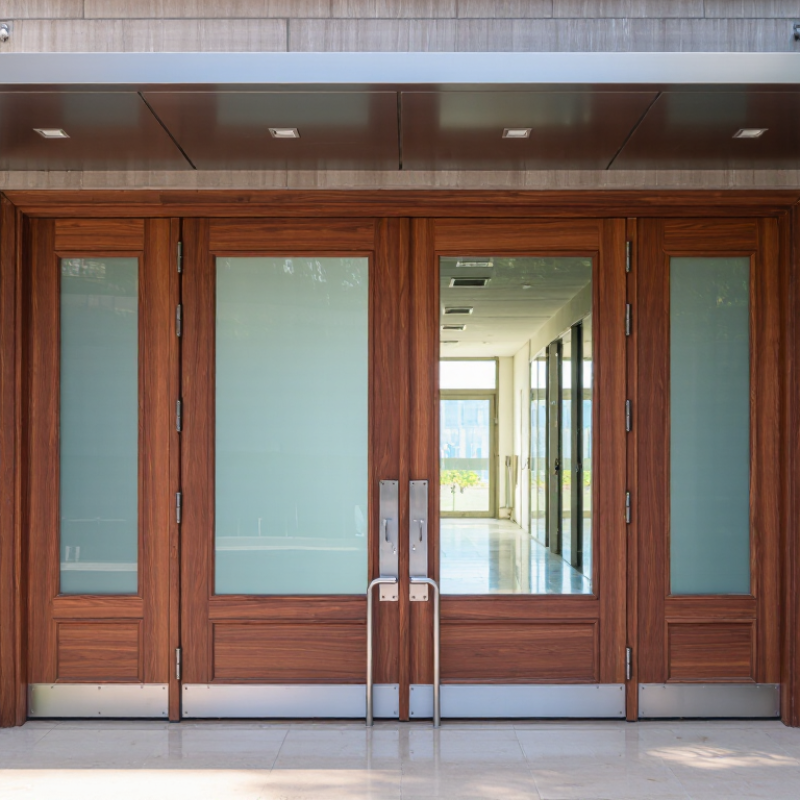
Top 10 Double-Door Types Ranked by EN 14351-1 Performance Data
Top 10 Double Doors: Which Is Best for Global Buyers?
EN 14351-1 does not rank double doors directly. It provides a framework for declared performance, including air permeability, watertightness, wind resistance, and thermal transmittance. This ranking uses typical tested performance, product design, and installation reliability. Results can change with size, glass, hardware, and climate.
Thermally broken aluminum hinged doors rank first for balanced strength, insulation, and weather resistance. High-performance uPVC French doors follow closely, especially in cold and wet regions. Engineered timber double doors offer strong insulation and attractive detailing, but require disciplined maintenance. Composite doors provide stable thermal performance and good security. Insulated steel double doors suit demanding entrances, although their frame design affects heat loss. Multi-point hardware matters more than many buyers expect.
Large aluminum lift-and-slide doors rank sixth for daylight and access, yet their wider panels increase testing challenges. Fiberglass double doors resist moisture well and need limited upkeep. Traditional timber French doors can perform reliably when sealed and fitted correctly. Narrow-profile aluminum doors create a refined appearance, but thermal results vary greatly. Basic hollow-core metal doors rank tenth, mainly because insulation and condensation control are often weaker.
Ask for declared values, not attractive claims. Check the tested door size and opening configuration. A small sample may not represent a wide double-door set. Installation records also provide useful evidence. In practice, I have seen excellent products lose performance through poor sill drainage and uneven frames. That detail is easy to miss. EN 14351-1 data is valuable, but it is not the whole buying decision.
| Rank | Double-Door Type | Typical Frame and Leaf Construction | Typical Thermal Transmittance Uw / Ud (W/m²K) | Air Permeability EN 12207 | Watertightness EN 12208 | Wind Resistance EN 12210 | Typical Acoustic Rating Rw (dB) | Security Options EN 1627 | Key Advantages | Main Limitations | Best for Global Buyers | Overall Fit |
|---|---|---|---|---|---|---|---|---|---|---|---|---|
| 1 | Thermally Broken Aluminium French Doors | Powder-coated or anodised aluminium outer frames with polyamide thermal breaks, insulated panels, and double or triple glazing. | Approximately 0.9–1.6 | Class 3–4 | Class 7A–9A | Class C3–C5 | Approximately 32–44 | Up to RC2–RC3 when tested with suitable hardware and glazing | Strong resistance to weathering, slim sightlines, low maintenance, good dimensional stability, and broad international suitability. | Higher purchase cost than basic uPVC; aluminium profiles can conduct heat if the thermal break is poorly designed. | Modern residential projects, hotels, coastal areas, and large glazed openings. | 9.2 / 10 |
| 2 | Multi-Chamber uPVC French Doors | Multi-chamber rigid uPVC profiles with steel or composite reinforcement, insulated panels, and double or triple glazing. | Approximately 0.8–1.5 | Class 3–4 | Class 7A–9A | Class C2–C4 | Approximately 30–43 | Up to RC2, depending on reinforcement, locks, hinges, and glazing | Very good insulation-to-cost ratio, low maintenance, reliable sealing, and widely available replacement components. | Can experience thermal expansion or colour limitations in very hot climates; wider leaves may require reinforced hardware. | Energy-efficient housing, apartments, commercial buildings, and price-sensitive projects. | 9.0 / 10 |
| 3 | Engineered Timber French Doors | Finger-jointed or laminated softwood, hardwood, or engineered timber frames with weather seals and insulated glazing. | Approximately 0.9–1.6 | Class 3–4 | Class 7A–9A | Class C2–C4 | Approximately 32–44 | Up to RC2–RC3 with suitable laminated glass and multi-point locking | Natural appearance, good thermal performance, repairability, and strong acoustic potential. | Requires regular coating maintenance; moisture management and installation quality are critical. | Premium residential projects, heritage-style buildings, villas, and low-carbon developments. | 8.7 / 10 |
| 4 | Timber-Aluminium Composite French Doors | Insulating timber core on the interior with a protective aluminium weather shell on the exterior. | Approximately 0.8–1.4 | Class 3–4 | Class 8A–9A | Class C3–C5 | Approximately 34–46 | Up to RC3 in tested configurations | Combines interior timber comfort with exterior weather protection, high durability, and strong energy performance. | Usually one of the most expensive options; heavier leaves require high-quality hinges and installation. | High-end homes, severe-weather regions, and projects requiring long service life. | 8.6 / 10 |
| 5 | Insulated Fibreglass or Composite French Doors | Glass-fibre-reinforced polymer or composite skins over a foam or timber-reinforced insulated core. | Approximately 0.8–1.5 | Class 3–4 | Class 7A–9A | Class C2–C4 | Approximately 28–40 | Commonly up to RC2 when tested with reinforced frames and locks | Low moisture absorption, good resistance to corrosion and rot, and stable thermal performance. | Colour and surface repair options vary; certified configurations may be less widely available in some markets. | Humid, coastal, and high-maintenance-sensitive markets. | 8.4 / 10 |
| 6 | Insulated Steel Double Doors | Galvanised or coated steel skins over a mineral-wool or polyurethane-insulated core, usually with reinforced frames. | Approximately 1.1–2.0 | Class 3–4 | Class 6A–9A | Class C3–C5 | Approximately 30–42 | Up to RC3–RC4 in tested security doorsets | High strength, good resistance to forced entry, fire-door compatibility in tested assemblies, and robust commercial performance. | Heavier than other options; thermal bridging, corrosion protection, and hinge capacity require careful specification. | Commercial entrances, utility buildings, security-focused projects, and high-traffic applications. | 8.2 / 10 |
| 7 | Aluminium Bifold Double-Leaf Doors | Thermally broken aluminium folding leaves with insulated glazing and multiple hinges or carriage systems. | Approximately 1.0–1.8 | Class 3–4 | Class 6A–9A | Class C2–C4 | Approximately 30–42 | Usually up to RC2, depending on the complete tested system | Creates a very wide clear opening, offers flexible ventilation, and has a contemporary appearance. | More hardware and joints can increase adjustment and maintenance requirements; threshold detailing is important for water control. | Terraces, restaurants, hotels, garden rooms, and indoor-outdoor living spaces. | 8.0 / 10 |
| 8 | Lift-and-Slide Double-Leaf Doors | Large thermally broken aluminium or composite panels running on a lift-and-slide track with insulated glazing. | Approximately 0.8–1.6 | Class 3–4 | Class 6A–9A | Class C2–C4 | Approximately 32–45 | Up to RC2 in selected tested systems | Very large glazed surfaces, easy movement of heavy panels, excellent architectural appeal, and strong daylight access. | Higher system cost, demanding installation tolerances, and less immediate opening width than a fully folding system. | Luxury residences, premium hospitality projects, and large openings with high energy requirements. | 7.9 / 10 |
| 9 | Uninsulated or Minimally Insulated Aluminium Double Doors | Standard aluminium profiles with single glazing or basic insulated glazing and limited thermal separation. | Approximately 2.0–4.5 | Class 2–4 | Class 5A–8A | Class C2–C4 | Approximately 28–38 | Up to RC2 in suitable tested configurations | Lightweight, durable, economical, and suitable for frequent use in mild climates. | Lower thermal performance and increased condensation risk in cold climates; thermal bridging can be significant. | Warm climates, internal-to-semi-external applications, retail spaces, and budget projects. | 7.2 / 10 |
| 10 | Traditional Solid Timber Double Doors | Solid or laminated timber stiles and rails, often with decorative panels, glazing sections, and perimeter weather seals. | Approximately 1.4–2.5 | Class 2–3 | Class 4A–7A | Class C1–C3 | Approximately 28–38 | Typically RC2 when specifically engineered and tested | Classic appearance, strong design flexibility, good repairability, and suitability for traditional architecture. | Performance is highly dependent on timber movement, coating maintenance, weather exposure, and installation detailing. | Heritage properties, traditional villas, low-rise residential buildings, and decorative entrances. | 6.9 / 10 |
Performance values are representative ranges for commonly tested external double-door configurations under EN 14351-1-related product assessment. Actual results depend on frame dimensions, glazing, panels, hardware, thresholds, seals, manufacturing tolerances, and installation. EN 12207 air-permeability classes run from 1 to 4, EN 12208 watertightness is commonly classified from 1A to 9A, and EN 12210 wind resistance uses class and pressure classifications. A product’s verified Declaration of Performance and test report should be checked before international specification.